Showing posts with label Headway. Show all posts

Sunday, December 29, 2019

Under the hood: Maxon 1974 U-1000 Pickup

Shop My Store on Reverb

This 46 year old Maxon U-1000 showed up on Yahoo Auctions needing a new home and a new pickup lead wire. I though the U-1000s started in 1975 but the stamp on this one shows a 1974 date.


Thankfully the pickup coils were both intact and there were no shorts. There are the remains of a "Maxon" sticker that would have looked like this:


You can see that Maxon did a decent job of replicating the good old PAF design with the wooden spacer and the metal bar. The magnet is probably Alnico 8 if it is in line with the typical U-1000 design.


A little bit of soldering action later we have a nice vintage U-1000 reading a bit over 8k in resistance.


Now to find a guitar to put it in....

Saturday, September 1, 2018

Back in the land of the good old Greco

Aoyama Oyaji has returned back to the Aoyama base since last month and no sooner did the dust settle than I bought couple of nice Grecos from the early 80's. Both have a little bit of good old fashioned playing wear but with a string change and a cleanup are back in fighting shape.

1982 Greco TE-600 (guess) and 1983 EC-57-60
The tele in the black and gold style is an April 1984 tele which means the end of the line for Greco Fender copies since the partnership with Kanda Shokai and Yamano Music with Fender USA and Fujigen started up around that time.  This is a tone monster with some very nice tele pickups inside and great sustain. From what I can tell under the poly finish is a 3-piece sen ash body. There were a few of these D82**** models out there including the one pictured below from a few years back which suggests a free for all on the production floor or perhaps alternately these were new models planned for the 1982 "Mint Collection" era that didn't make it past the month of April 1982.

April 1982 SE-???
The Mint Collection EC57-60 is a version of the original 50's era Gibson black beauty Les Paul Custom that gives the warmth of the all-mahogany body construction, along with the weakness of the non-volute headstock. Fortunately this one has survived with no damage except a couple of finish chips on the neck.

It is just over 4.0 kg which is quite light compared to the two example I had before which were 10 pounders. The three Screamin' 1982 pickups give the three neck / out of phase middle+bridge/ bridge options.  It would be lovely to have an ebony board with MOP but this rosewood board is nice and at the price point there really are no complaints.

Classy pair of 30-something Grecos
Greco 8's Black + Gold


Friday, May 27, 2016

Sonix Guitars - from the biggest music store in Hamamatsu and Deviser!

There are a few of these "Sonix" guitars out there. The background is that they are a store brand "produced" by Sonix store in Hamamatsu, Shizuoka prefecture in Japan. Hamamatsu also happens to be the home of Yamaha musical instruments and Tokai Gakki. As far as I can tell the Sonix guitars were made by Deviser and more or less matched the Momose line of guitars for specs. Sonix seems to have been one of the big dealers of Bacchus, Rivdrhead, and Momose guitars from the late 90's and you can see some examples of that series (one, two,  three, four) courtesy of the Internet Wayback Machine.

The Sonix brand seems to show up in 2006 with a Regular Spec line and a High Spec line. This link from 2009 has some beautiful LP-style guitars for sale.

I have seen a few Sonix guitars for sale over the last few years and managed to get the 62-style strat and SG two at reasonable prices. The specs seem to vary between the runs they did. The strat is basically a Momose-spec with a 2-pice body and nitro finish. It came with a nice set of Lindy Fralin Blues Specials but I think the last owner put those in along with the reproduction .1 mfd cap.
The SG has the same "Custom Craft" logo as Momoses and has a 1-piece mahogany body and nitro finish. There were models with Brazilian boards but this one seems to be Madagascar to me.

That is all I have on the Sonix story so far...


Saturday, August 8, 2015

Mint Collection EC57-60 1982 "Super Real"LP Custom

1982 Greco Mint Collection EC57-60. Sure, it doesn't have and ebony fretboard or MOP inlays but it is a pretty good Gibson substitute with the all-mahogany body/top/neck, 50's style neck and headstock angle. 


Tuesday, June 30, 2015

THUMB Acoustic by Terada

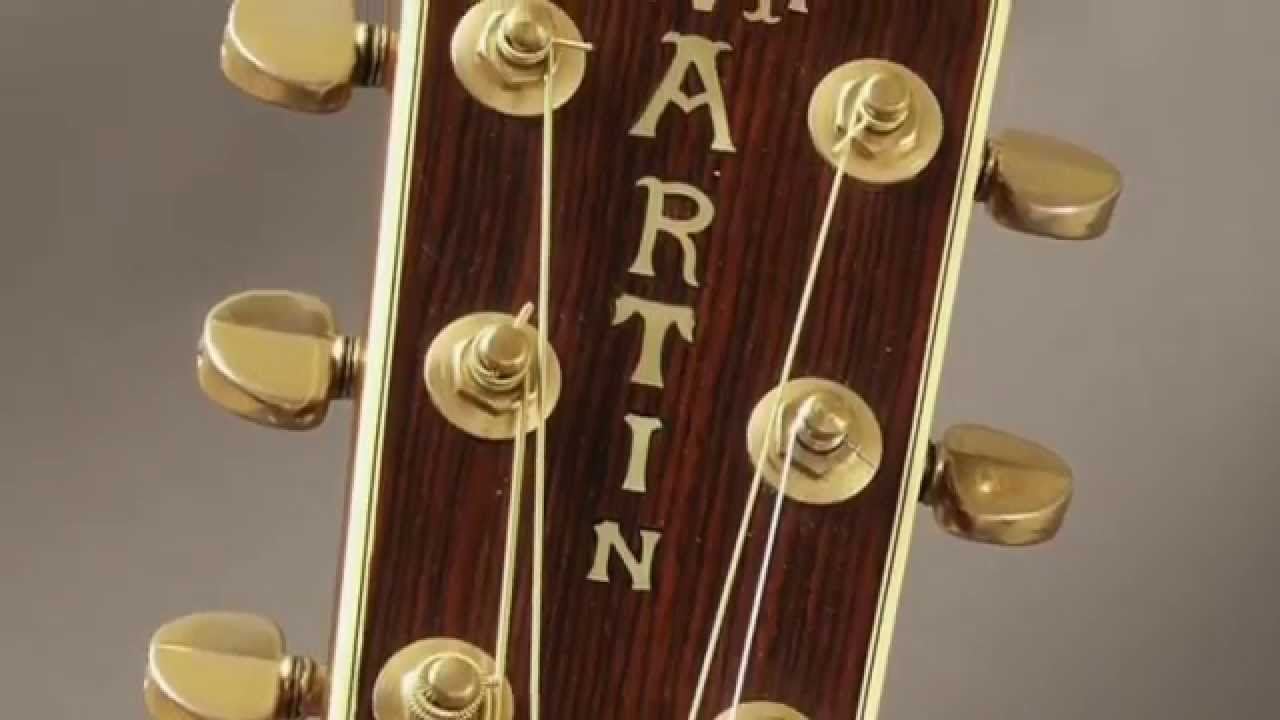
Oyaji has been in Japan for a few days enjoying the nice weather before the summer heat hits. A tour of the main guitar stores in the Tokyo area was uneventful with very few interesting old Japanese guitars up for sale. Yesterday however at the Yokohama Ishibashi there was something. An old acoustic with some cloudy lacquer and THUMB in large round font like an old Martin.

Thumb by Terada
Thumb headstock

Martin headstock font

It was labelled as "Junk" since the high E string sits low in the nut and buzzes on the first fret in open position. Other than that the action was perfect and there were no fatal body blows to worry about. Since it came with a hard case it was hard to say no to this oddball so now I am have a new Thumb. I always wanted an acoustic in this Martin style but never found one that was affordable or sounded good. A trip to Ray's Guitar Spa in Singapore should sort out the nut and then it will be good to go.


Thumb by Terada

Thursday, April 2, 2015

Dry-Z : From the blog of Jun Takano Part 2

Part 2 of the blog entry of Jun Takano regarding the "Z-DRY" development. Translated from the original Japanese.


At the time I had a pretty close relationship with a music promoter who also played guitar and consulted me regarding foreign musicians' guitars and gear more than a few times.

Or course, whenever he had problems with equipment of foreign musicians (such as needing emergency repairs) I would always deal with it on an emergency basis so I had come to the point where I had gained his strong trust.

So, when I showed him the guitar with the prototype pickups he told me that he wanted to borrow it so he could show it to some foreign musicians.

There was no particular plan to put the guitar for sale on the market so I agreed and left the guitar in his hands.....

After a few days had passed word came from my friend that he had shown the guitar to Don Felder (Eagles) who really liked the sound and wanted to have one himself.

After that we sent out a newly built guitar with a set of pickups installed. We were both pretty happy to have the pickup get some recognition.

However, there was still some way to go yet. While it was close to the essence of the sound that I was aiming at, there was still a substantial gap to overcome.

On the occasion of the next business trip to Matsumoto I had another meeting with the previously-mentioned Ushimaru-san.

---------------------

Photo of a winding machine from 1981 Greco Catalog: "The R&D Department; continually developing and building prototypes. The passionate pursuit of sound using the know-how accumulated over the years has given birth to pickups like "DRY", "Screamin'", "The Groove" and "Baby Gang."

----------------
Ushimaru-san firmly grasped the sound I wanted and we resolved to change the specifications of the magnet.

Around that time I was personally pretty well connected with the music business. There was a very big name in the music business (who everyone probably would still know today) who was a busy producer and studio musician so I passed one of the guitars to him.

A few days later he let me know that he was really satisfied with the guitar. At the time he was playing on a prime-time TV show and had ended up using the guitar all the way through the whole show.

Another proposal came from Ushimaru-san. 
There was a small amount of US-made wire that was a sample (for prototyping).  Right away we went to making a third prototype......

---------------------

Winder picture from the 1981 Greco catalog: "There is a dedicated prototyping production line in the Greco R&D Department.  With all the machines needed ranging from those for prototyping bodies to the coil winders for numerous coil and pickup combinations,  refinement of sound goes on until it it is completely acceptable."
------------------------

The result came out to be extremely close to what I wanted. 
Santana ended up trying it out and wanted a set so a few days later I sent them off.

Up to that time the pickup had more recognition by foreign musicians than within Fujigen itself and more and more foreign guitarists gave good feedback.

At a planning meeting it was decided to put the pickup into production.
 It was now time to name the pickup as a crystallization of the efforts we had made. I really didn't like the inorganic names like U-3000 and PU-2 that had been used up to that time. Respecting that "the name should demonstrate the voice" it was given the name of "DRY" to most closely match the tone. This was way before Asahi Beer did it mind you!


Part three to follow.

Sunday, March 29, 2015

Dry-Z : From the blog of Jun Takano

There is a lot of speculation on what makes a DRY-Z sound like it does. Nobody really seems to know what that is except perhaps the persons who designed it way back in 1979. 

Jun Takano (高野順)was one of those people and is well-known today as a boutique winder for K&T pickups.

Jun Takano from http://www.musicland.co.jp/content/ktr/img/about/takano.png

Fortunately, he wrote a few pages about the development of the DRY-Z. There are unfortunately no secret recipes revealed. The following is translated from the original 2010 Japanese language blog entry of Jun Takano.

Z-DRY
It's been already 30 years since the birth of that humbucker. It is pretty well known that I had a close relationship with Greco at the time and is not a secret so I am going to tell it like it happened. 

At the time Greco guitars were made by Fujigen Gakki, now known as FUJIGEN. I was making regular business trips to Matsumoto for development and improvement as a non-regular employee.

I was younger and had a lot more stamina back then.:-)

The person who best understood my demands and offered his collaboration, while also matching my arrogance and self-centeredness, and with all the respect due to him as a top engineer, was the "hard-working genius" Ushimaru-san.

More than being limited to woodworking, Ushimaru-san had a deep knowledge of electronics and was second to none in skill, as shown by his development of the GR guitar synthesizer.

It was the summer of 1979 when Ushimaru-san and I started prototyping a new pickup. Even now the memory is fresh of the brilliant green of the rice fields of Matsumoto.

Fujigen factory (from http://www.fgnguitars.com/images/history/11.jpg)


We took this up during a one week business trip. At the end of so many meetings that it was getting to be too much, the pickup we made ended up looking from the outside like a regular humbucker.

We put the prototype we had made into in an original shape solid guitar and had it sent off to Kanda Shokai. That became unit #1.

That was the beginning of a very busy time in many different ways.


Part Two to follow.

Friday, March 20, 2015

New Momose LPs from Deviser at Guitar Planet

You could definitely do worse than getting one of these Momose MLS1-STD/NJ Les Paul-style guitars. Links here and here to Guitar Planet in Ochanomizu. Photos from Guitar Planet. No affiliation with the store, I just like the guitars.

Here is a link to the product page on the Deviser site.


Sunday, August 31, 2014

From the Past #2: Early Bacchus Live Road / Vintage Series

This Bacchus Live Road is the oldest one I have seen up close. There are a few things that make it different from the later Vintage Series models including lack of serial number and a medium offset tenon. I am not sure if it is a BLS-95 or earlier but my understanding is that the BLS-120s onward would have had a long tenon and generally had serial numbers. 

Two-piece maple top with a 1-piece mahogany back. The guitar was finished in lacquer.


I switched the larger Gotoh bridge for a Tokiwa vintage style ABR.


Decent fretboard wood with some nice looking inlay patterns. This had jumbo frets unlike the later BLS-59 guitars.


You can see some of the chips and scratches on the headstock but there was no headstock finish clouding like with some of the later BLS-120 models.

 Medium offset tenon.


Friday, August 15, 2014

Headway Acoustic from the 80's: HD-510D


I don't know much about old Japanese acoustics. I bought a new Yamaha jumbo in the 1990's and a Takamine jumbo in 2009 but they were brand new guitars. Since I was getting into old Japanese electrics I also wanted to find a nice vintage Japanese acoustic. Ochanomizu is a great place to try out different guitars so off I went to Shimokura Second Hands in Ochanomizu in April 2012.


I wanted to get a nice example of a vintage Japanese acoustic. Choosing one is not an easy task with so many fine examples of Yamaha, Tokai Cat's Eyes, Morris, K. and S. Yairi models around to name but a few of the more common brands. Old acoustics also are very susceptible to the effects of temperature and humidity. In Japan that means that acoustic guitars can often come with neck and body issues. In any case, Shimokura has some great techs and as far as I have seen they always set up each guitar as well as possible and price them according to their condition.


I tried a few Morris and Cat's Eyes models in the store. I cannot remember the models but I was interested in some of the higher end Martin copies with extra bling such as larger inlays and purfing. Most of these had fairly thin necks and didn't really have much projection or volume. I am sure that there are excellent examples of these guitars somewhere but on that day I didn't find anything that spoke to me. They did have a Headway guitar there that day and that was the last guitar I tried. It was clearly the one for me as it had a very fat neck and was by far the loudest guitar of the ones I had tried. Since I had a few Bacchus examples and knew that the Headway brand was also from Deviser I was pretty comfortable taking this one home.

As with most Deviser products the serial numbers don't have any information about the year of production. I don't know the exact manufacturing year but was told it was from the early 1980's. Internet searches show other HD-510 models from the 1980's so that is probably correct.
Other HD models are still offered from time to time today by Headway. I am not sure what the modern equivalent would be as the 500 level HD-501 model listed on the Deviser site is a custom model listing in the 300,000 yen plus range.

I'm interested in learning more about old Headway guitars so please let me know if you have an old Headway acoustic.

Details: Solid spruce top, laminate rosewood back and sides, ebony fingerboard and bridge, waffleback tuners, no truss rod.

Nothing more to add but some pictures below: